How To Write A Love Letter That Won’t Make You Cringe

Posted by Rodry

image

©New Line Cinema/Courtesy Everett Collection

Some things are just better done the old-school way.

Don't believe me? Take the preparation of mac and cheese. No matter how quickly you can whip up the stuff from the box, nothing tops real cheese slowly melting over perfectly al dente pasta, right? Similarly, handwriting a love letterâ€"stringing together all the reasons your significant other is the mac to your cheeseâ€"is totally worth it.

Sure, composing a letter requires some heavy lifting: careful consideration of paper, thoughtful planning, and writing with intention (since, you know, there's no delete button). But the virtual alternativeâ€"because it looks identical to the text you sent about needing toilet paper the day beforeâ€"simply can't be appreciated in the same way.

So, when you want to surprise your SO with something special, take pen to paper. And don’t worry about getting stumped because Jane Greer, Ph.D., relationship expert, and author of What About Me?, is here to train you on this old school art step by step.

1. Take your time.

Consider how long your partner will hold onto this token of your love. Since it’s unlike most of your digital exchanges, there’s a good chance they’ll cherish your love letter for a long time, so give them a reason to keep coming back to it years later. Put thought into the stock and color of your stationary, says Greer. More than anything, the paper should be durable (so they can reread it at every anniversary, duh).

But before you put pen to paper, take some time to figure out what you actually want to say. On a piece of scrap paper, jot down the key things you want to share with your partner. This will help you keep the actual love letter organized and easy to follow. (And if you’re not proud of it the first time around, try againâ€"there’s no harm in a few drafts.)

2. Include specific reasons you're crazy about your SO.

First, address your letter with your partner's nickname (if they have one). Then, "focus on one truly unique quality you love with an example," says Greer. For example, mention your appreciation for your partner's openness and willingness to share. Then, explain why you appreciate this about them (maybe because it taught you to find confidence in your own vulnerabilities) and how it continues to impact you.

Focusing on specifics will help you resist the urge to rehash the entire timeline of your relationship in the letter and describe how every moment made you feel. You don’t need to start at the beginning, since your partner knows how the story goes… they were there, after all.

Avoid statements such as "your eyes sparkle like…" they’re generic and cliché, and you’re better than that, says Greer. If you reread your sentences and realize the letter would still hold up if it were addressed to someone else, you need to dig deeper.

3. Say something you wouldn't say IRL.

Once you’ve covered what you love most about your partner, take this opportunity to share something with them that you may not have had the guts to verbalize otherwise, says Greer. Because it’s a letter, you’ll be saved from the stress of stumbling on your words, or the insecurity that typically comes with watching someone react in person. Pen and paper give you the security to be honest about what you wantâ€"exactly the way you want.

Telling your partner that you’ve never forgotten that seemingly insignificant thing they did for you that one time, or that you still get butterflies when you see them, will make them feel valued and appreciated. This is especially significant after the honeymoon phase has ended, you’ve fallen into a routine (which is a good thing), and your partner might feel like they know all there is to know about you.

4. Celebrate your relationship.

Dedicate a few lines to telling your SO about how much you love what you’re able to bring into their life, like home-cooked meals or a shoulder to cry on, says Greer.

This is also the place to make actionable and realistic promises about anything you hope to do for your partner, like planning more date nights. Tell them how you intend to continue enhancing their life, just like they’ve enhanced yours.

5. Don’t shy away from bringing up the future.

Okay, so... if you don’t see a future with this person, you might just want to stick to text messages. Oh, you do? Good. In that case, bring it up.

Leave some room to tell your significant other about future plans you've mapped out and hopes you have for the two of you."The future is always a great idea because the future conjures security," says Greer. Visions of time together and of the relationship continuing will reassure your partner that you're not going anywhere. While this letter is mainly a sign of appreciation, Greer is all about using the opportunity to include a vow, too. Give your partner a reason to look forward to the creation of more memories.

6. Reaffirm your commitment.

"A letter should end with something that speaks to duration," says Greer. She suggests, after writing about your vision of a joint future, sign off with something like "always," or "forever."

And if that’s a little too much for you, ending with "love" is always a good move. It's a love letter, after all.

Aryelle Siclait Aryelle Siclait is an editorial assistant at Women's Health.

How to Start Investing in a Cashless Society

Posted by Rodry

The world is changing the way it conducts business. For centuries, humans have used cash to buy and sell goods and services because local fiat currency has been the most efficient way to to conduct commerce. Yet, over the past several decades, technology has drastically changed consumer behavior as well as how governments respond with new rules and regulations. Recent seismic payment shifts away from cash have been driven by the rapid rise of e-commerce and mobile payments.

Meanwhile, businesses have faced new opportunities and problems. How quickly is the world moving toward a cashless economy? Are certain geographic areas more likely to experience this transformation? Is this a positive change for society? We'll explore these questions, with an aim to capture nuanced positions, while discussing different ways investors can profit from this massive global economic shift.

A U.S. $100 bill with a lock and chain around it.

Governments, merchants, and consumers all have different incentives to move away from using cash to conduct business. Image source: Getty Images.

Let's start with perhaps the most complex and important piece of the puzzle: how governments around the globe are addressing the digitization of money and how these regulations might spur or dampen future growth of companies betting on a strong digital economic future.

Can a government ban cash?

Can governments ban cash? The short answer: They can certainly try. And whether you think attempts to regulate or ban cash are examples of big government run amok or bold attempts to curb tax evasion and black market activities, it's important to recognize that some governments have already tried an outright ban on currency notes. While these attempts have been rare, less drastic regulations surrounding the use of currency notes and bills are more common. Paying attention to these developments in different areas of the world can help investors identify places where there may be opportunity. 

Countries in northern Europe are moving most rapidly toward cashless societies, and while most of the movement is driven by consumers and industry, governments are also playing a role in the end of paper money.

In Sweden, merchants are allowed to legally reject cash, with "No cash accepted" signs sprouting up around the country. More than half of all banks in the country do not accept cash deposits or even keep currency on hand. Denmark's Chamber of Commerce recommended a similar law, permitting Danish retailers to reject cash, but the law was rejected by the country's parliament. The Norwegian Conservative political party championed the notion for Norway to become a cashless society by 2030.  

A series of interlocking gears with the words Regulations, Rules, and Compliance written on them.

Different government entities around the world have proposed laws limiting the use of cash. Image source: Getty Images.

Closer to home, former U.S. Treasury Secretary Larry Summers argued that banning high denominations of cash, such as the $100 bill, would go a long way toward stamping out black market activities, including drug dealing and terrorism.  While not government-related, Visa incentizes domestic merchants with $10,000 in rewards for ceasing cash acceptance. 

However, these moves pale next to India's sudden -- and what many described as reckless -- move to ban the 500 and 1,000 rupee bills in November 2016. These currency notes had been the country's two most widely used. The unexpected announcement caused mad rushes to exchange and deposit the notes and temporarily disrupted much of the emerging country's economy. While it is doubtful that the original goals of hindering illegal activities and rampant tax evasion were met, the move did jump-start India's electronic and digital payment ecosystem.

In Visa's 2018 third-quarter conference call, CEO Al Kelly touted the company's 20% payment volume growth and control of 50% of the market place. In 2017, Paytm's payment volume quadrupled as the digital wallet user base exploded.  

The positives of a cashless society

Society can benefit from the rise of digital and electronic payments at the expense of physical currency in many ways.

Consumers benefit from the security and convenience that credit cards and other forms of digital payments provide. After all, unlike most other methods of payment, once cash is taken and the bad guy gets away, there is no institutional recourse for the victim. The money is gone, unlikely to ever come back. With credit cards, American consumers are given much greater legal protection and can only be held liable for $50 if they have been victims of fraud or theft. 

Non-cash payments are also much more convenient. Frank McNamara discovered this lesson when he took clients out to dinner in New York City in the late 1940s and discovered, to his horror, that he did not have cash to pay for the meal. His wife bailed him out of an embarrassing situation by arriving to foot the bill. The circumstance made McNamara think of a way for customers to pay for what they could actually afford, but not with the money they had on hand. His solution was the Diners Club card, a charge card that could be used at participating restaurants and hotels. A plastic payment revolution was born. Consumers loved not having to carry large amounts of cash to make their purchases.

There are also benefits for merchants in removing cash from transactions. Studies show consumers are willing to spend more and are less sensitive to price when they use a credit card than with cash, which means retailers can charge more for products and services when they accept cards as a means for payment.  

Security is also an issue for businesses. There are costs to keeping money safe, such as on-site safes and secure transportation from the business location to the bank. Cash exposes businesses to the possibility of embezzlement, theft, and robberies. Accounting for this security can be both expensive and taxing. In fact, some studies suggest the use of cash costs a society as much as 1.5% of its GDP.

Governments have incentives to push for a cashless society. Law bodies are the ones introducing these laws and regulations to ban cash. Ending the use of cash in society curbs fraud because there's no room for fudging numbers when all payments are electronic, whether it be citizens or employers trying to dodge taxes or businesses trying to inflate revenue.

Cash is anonymous and largely traceless, making it ideal for negotiating illegal transactions, which, of course, the government has an interest in stopping.

Former Treasury Secretary Larry Summers is one of many who have argued cash is a boon to criminal activity. As he wrote in The Washington Post, "[I]llicit activities are facilitated when a million dollars weighs 2.2 pounds as with the 500 euro note rather than more than 50 pounds as would be the case if the $20 bill was the high denomination note." He concluded that "a moratorium on printing new high denomination notes would make the world a better place." 

The negatives of banning cash 

Some of the very characteristics that can make cash problematic are also reasons why it's so useful and integral to our society.

Cash is private, so using it makes keeps your transactions safe from surveillance. It's extremely difficult for others to see how you're spending your money, from nosy family members, as well as third parties, like your bank, credit card company, or credit rating agency. If you only use cash, you won't be at risk of having your account drained by a criminal or hacker who gets ahold of your information.

Then there's a sticky issue of how to determine the limits of what government should be trusted to track. Many believe this is the real reason behind government attempts to restrict the use of cash, including Steve Forbes who wrote in response to Summers, "The real reason for this war on cash ... is an ugly power grab by Big Government."

In an age where data breaches are virtually an everyday occurrence and big tech companies know us better than we know ourselves, it is easy to see why concerns about privacy and personal security are paramount.

London-based security company G4S issued a Global Cash Report, in which its CEO Jesus Rosano summed up cash's attractive qualities: "People trust cash; it's free to use and readily available for consumers, it's confidential, it can't be hacked and it doesn't run out of battery power -- these unique qualities continue to hold significant value to people living on all continents."

Finally, some people say that refusing to accept cash is a form of discrimination against people who are the least well-off economically.

In 2014, the Office of the Inspector General stated that about one-quarter of the country's adult population lived outside the "financial mainstream," which the report defined as either not having a bank account or having to use expensive services such as payday lenders. Many low-income earners don't have the same kind of access to financial institutions as the average person, for an array of different reasons.

After some New York City restaurants, such as Sweetgreen and Dig Inn, decided to stop accepting cash for payment, legislation was introduced to penalize such behavior with a fine, on the premise that it discriminated against the city's financially underserved. According to New York City Councilman Richie Torres, "We should not be stigmatizing how poor people purchase goods and services." 

How to profit from the war on cash

These complicated trade-offs are what free societies must wrestle with. Ultimately, people will come down on opposite sides of the issue and make different decisions concerning how to handle their own personal transactions. Either way, it's undeniable that the use of electronic and digital payments is growing rapidly around the world.

Cash raining down on a man celebrating.

There are several ways for investors to profit on society's move away from cash, including investing in standout credit card networks and digital wallet platforms. Image source: Getty Images.

In 2011, Mastercard released a study claiming that cash was still used as a payment method in 85% of the transactions facilitated around the world and good for about 60% of total retail transaction value. Six years later, at Mastercard's 2017 investor day, CEO Ajay Banga said that cash was now being used in about 80% of the world's transactions. In other words, while the use of digital and electronic payment methods is rising, there's still a long runway of growth.

There are several options for investors to consider as they explore how they can best position their portfolios to take advantage of these changing consumer habits while avoiding risk from potential regulations.

American Express is finally taking its digital presence seriously, partnering with PayPal Holdings and acquiring two fintech start-ups, an AI-powered concierge app called Mezi, and Cake, a mobile payments solutions app. Amex is also increasing its merchant coverage, meaning its cardholders can use it in a growing number of places, boosting an important revenue stream.

Discover Financial Services (NYSE:DFS) is being led by a new CEO who appears committed to maintaining the company's legacy of world-class customer service. Discover also has a major presence in the student and personal loan space, making it one of the few domestic companies with a presence in lending and payments. With a P/E ratio well under the market's average, it might also feature the most attractive valuation of all the stocks we will consider.

Brazilian payments company PagSeguro Digital is showing torrid revenue growth, but margin pressure, or the company's ability to profitably offer its services without lowering its price, has kept the stock price down. 

Tencent's payment platforms now boast an incredible 800 million monthly active users but is being held back due to regulatory concerns surrounding its video game business.

But while these companies all might offer investors market-beating returns, I don't believe they are all necessarily best-in-class. 

Company Type Market Capitalization Alibaba Group Holding (NYSE:BABA) Chinese e-commerce $413 billion American Express (NYSE:AXP) Credit card $86.1 billion Discover Financial (NYSE:DFS) Credit card $22.4 billion Mastercard (NYSE:MA) Credit card network $210 billion PagSeguro Digital (NYSE:PAGS) Brazilian payments $7.5 billion PayPal Holdings (NASDAQ:PYPL) Digital wallet $111 billion Square (NYSE:SQ) Payment processing $32.2 billion Tencent (NASDAQOTH:TCEHY) Chinese social/payments $420 billion Visa (NYSE:V) Credit card network $306 billion

Data source: Google Finance.

What are the top investments for a cashless society?

Here are the five best ways for investors to profit from this cashless movement:

1. Alibaba Group Holding

Alibaba makes this list due to its 33% stake in Ant Financial, the fintech juggernaut responsible for Alipay and consortium of other financial services including Ant Fortune, MYbank, and Zhima Credit. In Alibaba's 2018 Q3, Ant Financial boasted 700 million active users in China, a number made all the more staggering since 70% of its user base used at least three of its services.  

Ant Fortune is a mobile app that allows users to invest in a variety of Chinese investment vehicles, usually commission-free. MYbank is a cloud-based online banking platform for small businesses in China, where only approximately 14% have access to banking services such as loans and credit. Zhima Credit is a private credit platform that essentially generates credit scores for Chinese consumers who opt to use its services.

CEO Daniel Zhang shared the company's long-term goals in his 2018 letter to shareholders: 

Looking ahead, our vision is to deliver digital transformation for all our clients using cloud-computing technology in the areas of retail, marketing, finance, logistics and other supporting services within the Alibaba Operating System. Globalization has always been Alibaba's longterm strategy. We are making progress toward our goal to realize 'global buy,' 'global sell,' 'global delivery,' 'global travel' and 'global pay.' This will ultimately create one truly globalized digital economy where goods can move freely around the world, and not just from China to the world.

Alibaba's intentions to reshape finance and enable a cloud-based, global payments platform make the company a particularly compelling fintech investment for an economy moving away from the use of cash. With a massive base of 700 million members, there's a decent-sized chance Alibaba is a huge catalyst toward a universal payments and e-commerce platform.

2. Mastercard

Mastercard essentially acts as a toll road for consumers' money, taking a small cut every time it moves funds from consumers' bank accounts to merchants' accounts when a purchase is made. For all intents and purposes, in the Western world, Mastercard operates as one part of a duopoly with Visa as a payments network. It currently has about 2.5 billion cards issued across the globe and its products facilitate nearly 20 billion transactions every quarter.  

Its business model necessitates partnerships with banks and other financial institutions. Mastercard does not directly lend money to consumers. That responsibility falls on the shoulders of its banking partners, so Mastercard is not liable for the massive amounts of credit card loans held by its cardholders. While this also means Mastercard does not collect interest on these loans, the underlying results is that it runs an extremely asset-light business model, one with an envy-inducing non-GAAP operating margin of 59.4%, according to its most recent earnings presentation.  

This high operating margin allows Mastercard to return money to shareholders by repurchasing shares and issuing dividends, while investing in complementary services that it can upsell to existing clients. These bundled services include features and products ranging from data analytics and reward program management to fraud prevention tools and digital services. Accounted for in its "other revenues" segment, these services have maintained a double-digit growth rate for several consecutive quarters and are becoming an increasingly larger revenue stream for the company.  

Beyond adding to the company's top and bottom lines, these services make Mastercard's relationship with its clients much stickier, meaning it's harder for its partnering banks and credit unions to leave Mastercard for a competitor if the client relies on Mastercard for other services.

3. PayPal Holdings

The best way to think of PayPal might be as an operating system for money. From its digital wallet platform, account holders can send money to friends, make quick and secure online purchases, or transfer money to different accounts.

The company is benefiting from society's move away from cash, not the least of which is manifested by the growth in mobile payments, transactions facilitated with a mobile device. Judging by its growing 250 million-plus active account user base, PayPal is beginning to develop a real network effect moat, meaning PayPal's service becomes more valuable the larger its platform grows. As more consumers sign on to PayPal's service, the more compelling it is for merchants to accept PayPal as a payment method. Furthermore, the more merchants that accept PayPal, the more consumers can use the platform.

CEO Dan Schulman acknowledged the company was enjoying significant tailwinds from the move to a cashless society and mobile commerce. In the company's 2017 fourth-quarter conference call, he said, "We are riding powerful and accelerating tailwinds created by 2 global trends, the digitization of cash and the mass adoption of mobile devices. We are actively positioning ourselves to take full advantage of these trends and strategically moving our business into areas where we believe these transformations are creating the strongest opportunities."

Mobile payment volume represents 40% of PayPal's total payment volume, and the segment is quickly growing.  

A huge driver of PayPal's mobile success is its One Touch platform, where users can make transactions with one click on a registered device. This removes the hassle of entering cumbersome and tedious information into a small smartphone screen with each purchase. It's also more secure, as users are not leaving their personal identification and payments information on different websites, but instead giving it out as tokenized data through PayPal. 

Merchants love the platform because shoppers who use PayPal are much more likely to finalize a purchase compared to those who use other payment methods. One Touch has more than 100 million consumers and 10 million merchants participating on the platform.  

Three pie charts showing One Touch's effectiveness versus alternative payment methods.

Merchants love PayPal's One Touch because it has been shown that consumers are more likely to complete the purchase when it is available as a method of payment. Image source: PayPal Holdings.

4. Square

Square was founded by Twitter's CEO Jack Dorsey who developed the concept after a friend had a hard time selling a piece of art because he didn't have the ability to accept credit cards as payment. Square released its first product, a small square-shaped device that plugs into a mobile device, enabling any person with a cell phone to accept payments from credit and debit cards. Merchants began using these at the point-of-sale and the company soon expanded its suite of offerings.

The product effectively democratized payments, enabling small businesses -- think food trucks, farmer market vendors, etc. -- to cheaply accept card payments for the first time. Square's quarterly gross payment volume (GPV), the total amount of money facilitated through Square's point-of-sale system, is now $22.5 billion, and has grown between 29% to 31% year over year for five consecutive quarters.  

A tablet using Square's dongle to accept a card payment.

Square's products have rapidly evolved since its first product, which allowed mobile devices to easily accept card payments. Image source: Square.

Square's products for sellers have grown to include a robust suite of products for small businesses that were traditionally only available to larger retailers. This ecosystem differentiates Square form its payment processing peers because it gives it a deeper relationship with its merchants rather than just a vendor offering a commoditized service like cash registers. This subscription and services-based revenue segment has show explosive growth, with sales even eclipsing a triple-digit growth rate year over year in recent quarters.  

Square's products are also beginning to appeal to larger businesses. In the company's 2018 third quarter, businesses with annualized payment volume over $500,000 represented 24% of Square's customer base, up from just 16% two years before. There is also evidence that many of Square's sellers are growing within its ecosystem, a good indicator of future success for Square. More than 40% of Square's large sellers (defined as having GPV between $125,000 to $500,000) started off as micro sellers (less than $125,000 in GPV) on the company's payments platform.

5. Visa

Sporting a near identical business model to Mastercard, Visa's network provides fast and safe transport for funds from a consumer to a merchant bank account after transactions. It does not lend money to its card holders, meaning that it also features an asset-light business model with an operating margin that even tops Mastercard's. In 2018, the fiscal year's adjusted operating margin came in at 66%.  

Visa's management team sees the greenest pastures for future growth in developing economies, where local currency notes are still used more than other forms of digital and electronic payment methods. In the company's 2018 third-quarter conference call, CEO Al Kelly said:

As I look at our business ... over the next number of years, the bulk of our growth is going to come from overseas. It's something we're putting a lot of time and attention too. I've personally spent a lot of my personal time overseas. So, I think you're going to continue to see us invest in these markets. The cash displacement opportunity is great.

One of the company's greatest opportunities is in India, where the company enjoys a more than 50% market share. Visa recently renewed deals with five of the country's largest banks. Kelly said he was "confident that these deals contribute to further strengthening of our market leadership position across debit and credit products" in the country.

Investments making a cashless society possible

Alibaba, Mastercard, PayPal, Square, and Visa represent the purest ways to invest in the digitization of money. What makes these investments particularly compelling is that they are not passively benefiting from society's move toward digital and electronic payments but are actively driving that change.

Alibaba's Alipay and PayPal's core platform and Venmo, make it easier than ever for consumers to use their mobile devices to manage their money and facilitate transactions tp merchants but also between friends, families, roommates, coworkers, and classmates. Merchants love the platforms because it helps them complete more online sales.

Mastercard and Visa make it quick and safe to transfer money across digital and electronic channels. E-commerce would not resemble anything like its current state without these networks and the security and protection they provide to consumers and merchants.

Finally, Square makes it possible for small businesses to participate in the digital economy. Before Square, small merchants relied on the use of cash to sell their wares. Now it is easy for these sellers to make sales by accepting credit and debit card payments without expensive hardware or even a landline necessary.

With these positions in your portfolio, you'll be set to cash in on a cashless world.

Matthew Cochrane owns shares of Mastercard, PayPal Holdings, and Square. The Motley Fool owns shares of and recommends Mastercard, PayPal Holdings, Square, and Tencent Holdings. The Motley Fool owns shares of Visa and has the following options: short January 2019 $82 calls on PayPal Holdings and short January 2019 $80 calls on Square. The Motley Fool recommends PagSeguro Digital. The Motley Fool has a disclosure policy.

How to write a salary increase request letter (with examples)

Posted by Rodry

You’ve been plugging along at your job, picking up responsibilities, and rocking it for a while nowâ€"and even if you don’t have an annual review coming up for a while, maybe you feel like it’s time to start thinking about a raise. But unless you’re a seasoned negotiator, that may be no small task. If you don’t feel ready to sit down with your boss and talk it out, it’s best to start with a basic pay raise request letter or email to get the process started.

Most negotiation tips are created with a face-to-face interaction in mindâ€"how to use effective body language, how to use active listening strategies, and how to frame your verbal request. However if you’re not quite at that stage yet, putting your request in writing gives you a chance to collect your strongest talking points (and spin them exactly how you want to) without having to worry about the ebb and flow of a negotiation conversation. It’s also a paper trail, for better or worse, which can help you later.

What to include in your letter

Always start with a friendly professional greeting and some background about your history in your job or with your company.

For example:

Hi Phil,

As you know, I’ve been with the company for two years now, and I find it to be a challenging and rewarding environment every day. I have become a crucial member of the marketing team, working on initiatives that have increased our productivity and improved our results.

Once you’ve set the tone, it’s time to touch on the specific achievements that you think merit a raise. You don’t need to go into great detail on each oneâ€"succinct, specific bullet points are the way to go. The letter shouldn’t be a long slog for the reader. Instead, think of it as a highlight reel.

For example:

In my time here, I have made significant contributions to the team’s success, including:

  • Implementing a new SEO program that increased web traffic by 15%
  • Improving social media response time by an average of 20 minutes
  • Developing a promotional program that uses giveaways to increase brand awareness and customer engagement
  • Then tell ‘em what you came for: what you’re seeking, and why. When you’re writing this, be sure to stay focused on your own achievements and growth. It’s not about what your colleagues get or what you feel like you’re owedâ€"it’s about building a case for your value to the company.

    For example:

    I’ve exceeded the goals that were set out for me when I was hired, and I believe that going above and beyond my existing role merits a pay raise of 5%. This is in line with the industry standard for someone of my experience in this kind of role, especially with the goals I’ve met and exceeded in my time here.

    Again, this should be straight to the point. You should definitely have a number in mind, even if you don’t feel comfortable spelling it out as a starting point. Before you even start writing your request, do your research: check out sites like Salary.com or Glassdoor to see what people like you are making throughout the industry. If you make an unreasonable request, it could shut down your negotiation before it even really starts.

    Next, having made your initial pitch, it’s time to start wrapping up your letter. Offer to set up some time to talk about this in person or ask to talk about it in a standard one-on-one meeting with your boss.

    For example:

    I look forward to speaking with you in more depth in our next monthly meeting, and am excited about the projects we have on the horizon.

    Best,

    Jo

    Your letter doesn’t have to be hyper-formal, especially if you have a fairly casual relationship with your boss. But it should always be direct, polite, and professional. Even if you’re buddies with your boss, now is not the time for jokes or sarcasm. This letter or email should show you at your career best, and highlight you as a competent and productive professional.

    The note you write now will help set the tone for the negotiations to come and help you pull your thoughts together to ensure that you’re in a good position to get the raise you deserve.

    Good luck!

    The post How to write a salary increase request letter (with examples) appeared first on TheJobNetwork.

    How To Appeal Your Financial Aid Offer And Get More Money: A Step-By-Step Guide

    Posted by Rodry

    If you are afraid you have to give up your dream school because the financial aid offer wasn't enough, you shouldn't give up just yet. You still have the opportunity to appeal for an increase in grants or scholarships. Remember, if you don't ask, you won't get anything, so it is to your advantage to ask. Even if the university offered you a scholarship, you could always ask for more. According to a survey, the average financial aid package offered to students with financial needs was $20,494. If your offer was significantly smaller than that, you might be able to appeal it.

    The letter to appeal your financial aid offer could be worth more than $10,000 to you, so you should take the time to craft it. You want the letter to either set up a phone call, or if you live close enough, an in-person meeting. Having the opportunity to talk through your situation can help convince the university to give you a more substantial scholarship.

    The college will not rescind your offer of acceptance if you ask for more money. You have nothing to worry or lose by asking. Colleges are businesses so that means you can negotiate. Since you have nothing to lose by asking, you can start spending time drafting a thoughtful letter that can show why you should receive more aid.

    Who Writes The Letter?

    I recommend that the parents write the letter. Many students have little or no knowledge regarding their parents' financial situation, so it would be difficult for them to expand on the details to the school. Colleges expect the parents to be involved in the financial discussion, therefore it is acceptable for the letter to come from the parent.

    What Should I Include In The Letter?

    Once you have assessed your current financial situation, you can begin to write the letter. There could be a significant difference between your family's EFC (Expected Family Contribution) on your FAFSA (Free Application for Federal Student Aid) and your ability to pay for college expenses.

    Your goal in this letter needs to show that your current income, assets, and savings cannot cover the cost of attending college. As the FAFSA information is based on two-year-old financial records, many things could have changed since then. Make sure to mention any changes since then that may have changed your ability to pay the EFC.

    Some examples could be:

  • Job loss of a parent
  • New job with lower income
  • Death of a spouse
  • Any significant financial burden such as outstanding medical bills
  • New expenses such as childcare costs, private elementary and secondary school tuition, or ongoing expenses
  • Parents attending college
  • Multiple children attending college at the same time (including step-children that weren't included in the original FAFSA application)
  • Expenses for elderly grandparents
  • Any other significant loss that will impact your family or student
  • How To Negotiate

  • Know Your Number
  • Before you even write the letter, sit down and figure out how much would it take for you to be able to afford attendance. You must be prepared if they ask. Saying "I don't know," or "How much can you offer," is not acceptable. Look at the numbers and decide what is the minimum the college can offer you for you to attend. What is your bottom line to make this work?

  • Don't Send In Your Deposit Too Soon
  • As soon as you send in your deposit, the school knows you are committed to attending, so they won't be nearly as motivated to grant a request to increase a scholarship award. If you ask before you send in your deposit, you can show the school that you still want to attend, but need the financial incentive to make it possible.

  • Bring Your Documents
  • If you can't provide documentation (i.e., proof) of expenses and reasons why the aid award that was offered is not enough, then don't even mention these items in your letter or discuss them on the call or meeting.

  • Use Other Scholarships As A Negotiation Tool
  • A scholarship award from another college could be used as a negotiation tool. If you don't have any special or pressing financial circumstances, but a similarly ranked school offered you more in merit scholarships or grants, you can go back to your number one choice and ask for more money. You can use the other award letters to appeal for more money.

  • Request The Right Kind Of Aid
  • Before you write the letter, remember that some elite schools will only award aid to students who they believe cannot afford tuition. Ivy League schools like Harvard University, Yale University, and Brown University do not offer merit-based scholarships. However, they all do provide need-based scholarships.

  • Be Courteous
  • It literally pays to be polite. When speaking with the administrators, stress that the only obstacle in your path is finances. With a larger scholarship, your child would love to attend. You most likely won't get your way if you are unpleasant or try to bully or argue with the financial aid administrators. They also are less likely to help if they feel you are trying to game the system.

    "Professional Judgment" Letter Example

    Dear Financial Aid Director,

    I am writing this letter on behalf of Caroline Smith's admission into the University of Chicago. Caroline's first choice university is, and always has been, the University of Chicago. However, the only thing holding her back from accepting the offer and sending in her deposits is finances. I would like to have the opportunity to explain my situation in greater detail based on recent developments that have negatively affected my financial situation.

    My mother - Caroline's grandmother - has recently had to move into our home due to a worsening case of dementia. She is no longer able to care for herself, so we decided to have her move into our home. While we are grateful that we get to spend more time with her, there have been many unexpected expenses associated with this move. She is unable to climb stairs or use the bathroom without aid, so we have had to put in many expensive additions to our home, such as a ramp, and remodel our bathroom to make it easier for her to use. This situation has had a significant impact on our finances.

    In addition, we have two other children; one of which is attending college at Baylor University as a senior this year. Our youngest child will be applying for colleges next year, so that will be another financial burden.

    Lastly, Caroline's mother, unfortunately, lost her job at the start of the new year due to layoffs at her company. We are currently living on just one salary, and since my wife is nearing retirement age, she has not had any luck in finding a new position.

    Caroline was fortunate enough to get a scholarship from Vanderbilt University for $27,000 a year, renewable for four years. This is one of five merit-based scholarships she has received. However, due to our current financial situation, we would hate to turn down a substantial scholarship, although it is has been Caroline's dream to attend the University of Chicago since she was a young girl.

    I would like to set up a phone call with your office to discuss our financial needs further. We can provide proof and documentation of our current financial situation if needed. Thank you very much for your time, and we look forward to hearing from you soon.

    Sincerely,

    Matt Smith

    An open letter to Sadiq Khan: It’s time to start supporting trade union battles at Uber

    Posted by Rodry

    "The IWGB are trying to ensure a new generation of workers succeed, just like our fathers did before us."

    Sadiq Khan defeated the odds to become a top lawyer and one of the most powerful Labour politicians in the country. I come from a similar hard-scrabble background, common to first generation Pakistani immigrants, so he's something of a working-class hero for me.

    My parents, devout Muslims, came to a booming Britain of the 1960's around the same time as the Khan family. Sadiq's father was a bus driver and mine a factory worker. Nobody had it easy, but the social contract remained intact for immigrants – if you worked hard you could create a better life for your family in the new country.

    Trade union membership was part of the glue that held these important social contracts together. Unions not only defended people at work but also acted as an important support system helping newly arrived immigrants feel welcome and to become active in the community.

    My father was a member of the Transport and General Workers Union and was always grateful for what the union had done for him. Sadiq Khan once lamented to the BBC on how his father, as a union member, enjoyed decent pay and benefits whereas his mother, a seamstress, did not have the benefit of union protection and suffered for it.

    In his declaration of interests as Mayor, Khan boasts today membership of Unite, Unison, GMB and CWU who are meeting this week in Manchester as affiliates of the TUC. It's a tricky time for the large, affiliated trade unions because membership is on the decline, while abuse of workers, especially in the gig economy has never been more brazen and brutal.

    Like my father, I too am a trade unionist.  But as the nature of work itself is reshaped for the next industrial revolution, I find the IWGB is more responsive to the challenge than the legacy trade union model that served my father's generation so well.

    The IWGB's heartland membership is amongst precarious and gig workers of the low paid service-sector workers. In London alone, there are 114,000 minicab drivers from mostly BME and/or migrant backgrounds who desperately need a trade union on their side. Grassroots organising for this sector is bottom up, hard graft and trust must be earned. But the IWGB is bucking the overall trend and growth in membership, particularly in the minicab drivers branch of which I am a co-founder. Membership here is skyrocketing to make us the largest dedicated union representing minicab drivers in the UK.

    The struggle for social justice is more complicated than you might think. Yes, we are going back to court against Uber next month for basic employment rights with IWGB lawyers, and we are also taking on other minicab firms in similar battles up and down the country.

    But what people might not know, is we are all too often having to fight for social justice against local councils and transport authorities such as Transport for London. Surely they should be protecting workers, not fostering their exploitation?

    Two years ago Frank Field declared Uber labour in London to be sweated labour and called on the Mayor of London to act to eradicate sweatshop conditions – but we've seen precious little action. Instead, Transport for London doggedly refuses dedicated trade union recognition for 114,000 mostly BME minicab drivers.

    Yet 23,000 mostly white British black cab drivers enjoy the choice of five separate driver representative bodies recognised by TfL. We were staggered to even find that TfL tried unsuccessfully to block the Met from working with us on passenger and driver safeguarding issues, despite an epidemic of violence and abuse suffered by working drivers.

    The Mayor missed an important opportunity in Uber's recent re-licensing appeal to insist on statutory worker rights protections as a condition of getting their license back. More worryingly, TfL's most recent private hire strategy paper promotes more of the same by endorsing technology-enabled 'demand responsive' business models, that is so wasteful of human capital and the cause of so much congestion. Why can't the Mayor do more to take the lead from New York to reduce cab levels fairly and protect worker rights?

    Instead, the Mayor plans to make minicab drivers start paying the congestion charge despite firms like Addison Lee warning that they fully intend to make drivers pay the charge, rather passing it to the customer. The additional cost would mean an extra 11 hours per week on the road for drivers, currently making little more than £5 per hour. This was the last straw for London Assembly Member Len Duvall who said TfL's 'discriminatory' policies had been "rumbled".

    That's why, on Thursday, I will be joining dozens of Uber, Addison Lee and other private hire drivers as we demand that TfL and the Mayor put an end to their discriminatory policies that deny us a voice and bury us in regulatory costs.

    Like most British people of Pakistani origin, I'm proud to see Sadiq Khan rise to become Mayor of London. But I do want him to remember our common heritage and everything the trade union movement has done for both of us.

    To Sadiq Khan, we say it's time to welcome – not block – the work of unions like the IWGB in helping the new generation of workers – gig-economy workers – succeed, just as our fathers in the 1960's did before us. Who knows – maybe one day a minicab driver's son might become the Mayor of London.

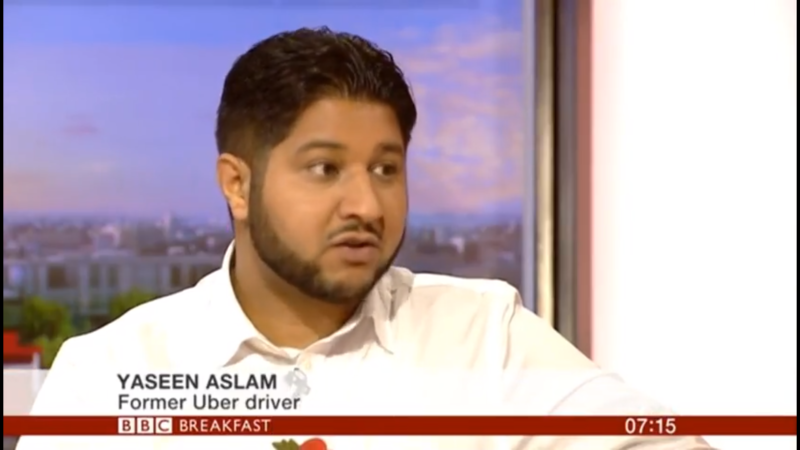
    Yaseen Aslam is co-founder for UPHD United Private Hire Drivers branch of the IWGB, and is the lead claimant against Uber for workers rights alongside James Farrar.

    Like this article? Sign up to Left Foot Forward's weekday email for the latest progressive news and comment - and support campaigning journalism by becoming a Left Foot Forward Supporter today.

    How to format new hard drive on Windows 10

    Posted by Rodry

    On Windows 10, whenever you get a new hard drive, it's important to format it before you start dumping files. The reason is that you want to ensure that the drive is working correctly, completely clean, and free of malware or malicious code that may harm your installation and personal files.

    And it's not just a good practice for new drives, but for used hard drives too (especially those previously connected to a different OS), as using the proper formatting, you can avoid issues and compatibility problems.

    Basically, when you format a hard drive, you're deleting all the data residing on the storage, and you start clean with a compatible file system (including NTFS, FAT32, or exFAT), which in this case Windows 10 understands to read and write data.

    There are many methods available to format a hard drive, but using Disk Management could be considered one of the best options for most users.

    In this Windows 10 guide, we'll walk you through the steps to correctly format a traditional hard drive or Solid-State Drive (SSD), whether it already has a partition or it was never initialized.

    How to format existing partition using Disk Management

    If you have a hard drive already configured with a partition, you can just format the existing partition to erase its content and start fresh with a clean drive.

    To format a partition using Disk Management, use these steps:

  • Open Start.
  • Search for Disk Management and click the top result to open the experience.
  • Right-click the new hard drive and select the Format option.

  • In the "Value label" field, type a descriptive name for the drive.
  • Use the "File system" drop-down menu, and select NTFS (recommended for Windows 10).
  • Use the "Allocation unit size" drop-down menu, and select the Default option.
  • Check the Perform a quick format option.

    Quick Tip: While performing a quick format wipes the drive faster, it doesn't check if the drive is damaged. On the other hand, when clearing the option, a full format will be performed, which not only wipes the drive clean, but it'll also check for bad sectors. It's an option that could take several hours, but it's a good practice to make sure the hard drive is in working conditions.

  • Unless necessary, clear the Enable file and folder compression option.
  • Click the OK button.
  • Click the OK button again in the warning message.
  • Once you've completed the steps, the system will format the selected partition on the drive, and then you can start using it to store files.

    How to create and format new partition using Disk Management

    If you happen to have a hard drive that was never formatted, you'll need to initialize and create a new partition before you can format it.

    Typically, you'll know when a hard drive doesn't have a partition, because it'll not appear in File Explorer, and on Disk Management, it'll appear as unallocated space.

    To properly set up a blank hard drive, use these steps:

  • Open Start.
  • Search for Disk Management and click the top result to open the experience.
  • Right-click the hard drive marked as "Unknown" and "Not Initialized," and select Initialize Disk.

  • Check the disk to initialize.
  • Select the partition style:

  • Master Boot Record (MBR) for hard drives smaller than 2TB in size.
  • GUID Partition Table (GPT) for hard drives larger than 2TB in size.
  • Click the OK button.
  • Right-click the Unallocated space, and select the New Simply Value option.

  • Click the Next button.
  • Under the "Simple volume size in MB" section, leave the default size if you're planning to use the entire hard drive to store files. Otherwise, specify the amount of space in megabytes that you want to allocate for the partition.

  • Click the Next button.
  • Use the "Assign the following drive letter" drop-down menu to select a letter for the new hard drive.

  • Click the Next button.
  • Use the "File system" drop-down menu, and select NTFS (recommended for Windows 10).
  • Use the "Allocation unit size" drop-down menu, and select the Default option.
  • In the "Value label" field, type a descriptive name for the drive.
  • Check the Perform a quick format option.

    Quick Tip: If you prefer a full format, clear the quick format option. Just keep in mind that depending on the size of the drive, it can take hours to finish.

  • Unless necessary, clear the Enable file and folder compression option.
  • Click the Next button.
  • Click the Finish button.
  • After completing the steps, the new hard drive will be initialized, partitioned, and properly formatted.

    If you're having trouble using Disk Management to format a hard drive, because of data corruption or other severe issues, you can use the DiskPart command-line tool to fix the problem.

    While we're focusing this guide on Windows 10, the steps outlined above will also work on Windows 8.1 and Windows 7.

    More Windows 10 resources

    For more helpful articles, coverage, and answers to common questions about Windows 10, visit the following resources:

    ‘This was a special year’: Colts coach Frank Reich writes letter to fans

    Posted by Rodry

    HOUSTON, TX - DECEMBER 09: Head coach Frank Reich of the Indianapolis Colts reacts in the second quarter against the Houston Texans at NRG Stadium on December 9, 2018 in Houston, Texas. (Photo by Tim Warner/Getty Images)

    × 'This was a special year': Colts coach Frank Reich writes letter to fans

    HOUSTON, TX - DECEMBER 09: Head coach Frank Reich of the Indianapolis Colts reacts in the second quarter against the Houston Texans at NRG Stadium on December 9, 2018 in Houston, Texas. (Photo by Tim Warner/Getty Images)

    INDIANAPOLIS, Ind. — The season may not have ended how fans hoped, but the Indianapolis Colts have a lot to look forward to–and coach Frank Reich is thanking fans for sticking with the team.

    While the season ended with a lopsided loss to the Kansas City Chiefs in the divisional round of the playoffs, the fact the Colts were playing in the postseason at all defied expectations. Going into the season, some experts rated the Colts as the worst team in the NFL. Early on, when the team was 1-5, it looked like those predictions would come true.

    Then the team won nine of its last ten games to clinch a playoff berth. The Colts even handed the Houston Texans a loss in the wild-card round.

    Reich had kind words for the fans in a letter posted on the Colts website.

    "I want to thank you for your unwavering support this season," Reich wrote. "Although we fell a couple steps short of our desired goal, this was a special year. We have tremendous players and leaders in our locker room. We have a top-notch coaching staff. We have an intelligent and passionate general manager and football operations staff. And most of all, the Irsay family supports us and wants the best for you. We are excited about the future!"

    In the letter, Reich said the team is built on three T's: "Trust, Toughness and Team." Those principles–and the commitment to get better each game–helped the team rebound from its rough start and reach the playoffs.

    "Our conviction in this belief was challenged when we found ourselves at 1-5. With our backs against the wall, we did not change anything – we remained committed to people and process. But it was at this point that we began to use the mantra '1-0' to express our mentality, and at the same time, emphasize a sense of urgency!" Reich wrote.

    The team had a mountain to climb and almost reached the summit.

    "Week after week our team was tested on this climb. The resolve and focus of our players would not be denied. There was strength, determination and a bond from our players that was inspiring to us all! And although we didn't quite make it to the top of the mountain this year, you can rest assured there were many lessons learned from our 2018 expedition that will help us in our climb for next year's season."

    Here's the letter in its entirety from Colts.com:

    Dear Colts Nation,

    I want to thank you for your unwavering support this season. Although we fell a couple steps short of our desired goal, this was a special year. We have tremendous players and leaders in our locker room. We have a top-notch coaching staff. We have an intelligent and passionate general manager and football operations staff. And most of all, the Irsay family supports us and wants the best for you. We are excited about the future!

    Flying home from Kansas City this past Saturday, I was thinking about the chapter by chapter journey of our season, and I felt compelled to share a few thoughts with you in hopes that you would be both encouraged and maybe even inspired.

    At our very first team meeting last April, we laid out a vision that the foundation of our club would be built on three T's: Trust, Toughness and Team. We chose to have our definition of toughness as a focal point. Painted in the locker room and on our wall as we walk out to practice: "a relentless pursuit to get better every day, an obsession to finish."

    Our daily commitment was focused on people and process. We decided we would surrender the outcome to focus on the process. We believed if we committed to getting "1% better every day" the desired results would follow.

    Our conviction in this belief was challenged when we found ourselves at 1-5. With our backs against the wall, we did not change anything – we remained committed to people and process. But it was at this point that we began to use the mantra "1-0" to express our mentality, and at the same time, emphasize a sense of urgency!

    We all know "1-0" is not original, and with no context provided, it might even seem a bit ordinary. But ask any team who has ever had their backs to the wall if "1-0" is ordinary. For that matter, ask any person facing difficulties (financial, health, personal), fighting hard just to make it through the next day or the next week…ask them if this kind of mindset is ordinary? The answer, of course, is no. On the contrary, taking a "getting better every day/1-0" mindset is the best approach to overcoming seemingly impossible circumstances.

    So, with our backs against the wall, "1-0" took hold. An important side note: there's only one reason anything sticks in the NFL. It's the players. It's the locker room. You need to have the depth of character and the right leadership for it to stick, and we have that!

    So here we are at 1-5, we dug ourselves this hole. But what happened over the remaining weeks of the season was, as my daughters would say, "epic!" Only three teams in NFL history had overcome a 1-5 start and made the playoffs.

    So how did our team overcome seemingly impossible odds? Well, it all started last April when everyone began making little "deposits" every day, fighting hard to find ways to grow and get better as individuals and as a team. All the way through organized team activities and through training camp. Even through our 1-5 start, no one failed to make a deposit every day. And these daily deposits compounded into something special. The reason for that was because we had commodities in our "account" that are priceless: trust and belief. That is what enabled these small daily deposits to accumulate so quickly.

    So, when we were 1-5 and it appeared as if all was lost, nothing could have been further from the truth. The reality was our "account" was about to begin paying out weekly "dividends" that would result in us winning 10 out of the next 11 games. We were "climbing a mountain" only a few had ever climbed.

    Week after week our team was tested on this climb. The resolve and focus of our players would not be denied. There was strength, determination and a bond from our players that was inspiring to us all! And although we didn't quite make it to the top of the mountain this year, you can rest assured there were many lessons learned from our 2018 expedition that will help us in our climb for next year's season.

    On behalf of the entire Colts organization, we express our gratitude for you joining us on this journey, and we also hope you were inspired by our Team and by our "1-0" mantra in ways that might help you climb your own "mountains."

    THANK YOU!

    Sincerely,

    Frank ReichHead Coach, Indianapolis Colts

    Colts Mission Statement: "To entertain, inspire, and unite by winning the right way."